Vaping is a transition to a life without tobacco and then without addiction.
By entering this site you accept our legal notices

Putting an end to the diacetyl myth
Update 07/2025: To address questions from some new vapers, let us add a few useful clarifications. No changes here: there is no diacetyl in e-liquids manufactured in France. Well ahead of other countries, French manufacturers quickly complied with AFNOR recommendations. The use of diacetyl (and other molecules) is also on the watch list of substances monitored by ANSES (the French National Agency for Food, Environmental and Occupational Health & Safety). Diacetyl has also been controlled by a European directive since 2017. Finally, it is worth noting that in France, numerous tests are carried out on e-liquids to check for the absence of CMR substances (carcinogenic, mutagenic, or toxic to reproduction). All these substances are strictly regulated.
NB: This article from 2015 no longer reflects the current reality (as of October 2019) regarding e-liquid composition and diacetyl. Since then, flavouring formulations have changed to completely eliminate diacetyl. We can safely say that we have moved past this issue, indeed...
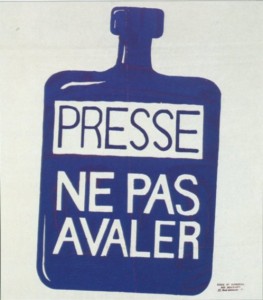
It had been a little while since the vaping world was last hit by such blatant misinformation regarding liquid ingredients. Sadly, that peace didn't last, following the publication of an American study in the scientific journal “Environmental Health Perspectives”. It released results that were, predictably, alarming regarding the levels of diacetyl and acetyl propionyl found in 51 liquids—without even specifying which liquids were at fault (lost their nerve, perhaps?). You can find more details on the blog ma-cigarette.fr and the study in question here.
Sensationalism over substance
The main issue with this story, as far as we vapers are concerned, is the sheer speed and momentum that misinformation can gather when it targets e-cigarettes. The buzz is immediate, global, and explosive.
A few examples:
And countless others are jumping on the bandwagon across social networks like a row of dominoes.
The guaranteed outcome: sowing doubt in the public mind, including among vapers themselves, and tipping the scales to make vaping look like the villain. As if the industry needed that right now.

A failure of journalistic integrity?
First of all, let’s set the record straight: stories about diacetyl, acetyl propionyl, and acetoin are nothing new. We have known about them at least since cases of bronchiolitis obliterans ("popcorn lung") were detected in workers at a popcorn factory. For the media to act like shocked innocents without any perspective reveals a severe lack of basic research and journalistic integrity. They pulled the exact same stunt earlier this year. Remember the headlines claiming that "e-cigarettes release levels of formaldehyde that increase cancer risks by 5 to 15 times"?
We owed that one to the wonderful website Buzzfeed—true professionals of quality journalism, clearly.

Pro-vaping arguments
In this endless game of finger-pointing, pro-vaping advocates can easily argue that a study made in the USA doesn't necessarily hold the same relevance in France or the UK. For European manufacturers, diacetyl and acetyl propionyl are practically old news. French manufacturers have long been aware of these safety issues, and they certainly didn't wait for the mainstream press to make a meal out of the topic before taking action. France is not the US, and manufacturers here comply with EU Regulation 1334/2008, which sets strict safety criteria to eliminate substances that could harm consumer health. It is also no coincidence that vaping professionals proactively joined the AFNOR voluntary standards committee.
It's time to stop making sweeping accusations against e-cigarettes and vaping. The vaping industry is not a band of pirates releasing dodgy products just to maximise profits. In Europe, we know that to survive, the industry must be proactive, clear, and transparent. Professionals are not going to shoot themselves in the foot by selling products they aren't 100% sure about.

100 times less
Finally, we must look at Dr Konstantinos Farsalinos' reaction to this pathetic article. He points out that the levels of diacetyl and acetyl propionyl found are extremely low, far lower than those found in traditional tobacco cigarettes (10 times lower for diacetyl and 100 times lower for acetyl propionyl).
He adds: “the article creates false impressions and exaggerates the potential risk of exposure,” and “We must not forget that the risk of discouraging smokers from using e-cigarettes as a smoking cessation tool is higher than the risk of being exposed to diacetyl and acetyl propionyl at the average levels found in this study.”
It is precisely the spreading of this doubt that we must fight. It is our responsibility as vapers to use our own voices to spread a little more common sense and reason around us.

Pascal
Bonus: For those curious to know more…
Certain flavourings can contain three compounds that cause concern for us vapers: diacetyl, acetoin, and acetyl propionyl. These three are primarily found in e-liquids and DIY flavour concentrates (yes, DIY is affected too) that fall into the dessert and "custard" profiles. This means creamy profiles, like vanilla custard, as well as many highly successful sweet e-liquids.
Regarding acetoin, few concrete facts are known. Acetoin has a catalytic effect on molecules, which can naturally create diacetyl. However, this effect does not seem to occur once the liquids are mixed. That's a good start, but it remains to be confirmed.
These compounds, which are safely found in certain food items, are completely harmless when ingested. However, they are no longer harmless when inhaled. Simply put, they are not suited for vaping. According to studies by Dr Farsalinos, any e-liquid or flavouring containing acetyl propionyl should be avoided, even if they are present in much lower quantities than in tobacco cigarettes.
Diacetyl is virtually no longer used by flavour houses and e-liquid manufacturers. This is especially true in France, where manufacturers were quick to react. In Europe, food flavouring manufacturers must deliver products compliant with EEC Regulation 1334-2008, which sets strict safety criteria to eliminate substances that could harm consumer health.
Unfortunately, the molecules used to replace diacetyl are often acetoin and/or acetyl propionyl, molecules which ongoing tests are proving to be just as undesirable. This is a relatively recent discovery, dating back to 2014. Since then, every manufacturer has been facing their responsibilities and is actively working to eliminate these compounds entirely.
View all comments (7)
Best blog articles
Use correctly the coil for your Electronic Cigarette
 Le Petit Vapoteur


- Guides choose fabricate Learn more Withdrawal Vaping glossary
-
Tools
ecigarettes
eliquids
Experts
diy
-
Blog
Latest blog posts
-
Mastering your coil builds: everything you need to know about building your own
02/27/2026

-
Watts, What Are They For?
02/13/2026

-
On the Use of Alcohol in E-Liquids
02/6/2026

-
Article 23: The Successful Mobilisation of Vapers
02/3/2026

-
Mastering your coil builds: everything you need to know about building your own
02/27/2026
- Shipping details
- PRO


 Age verification

LeB
06/23/2025 11:25:30
Merci pour cet article ! Serait-il possible d'avoir une petite update ? Quand est-il en 2025 ?
Pascal
10/25/2019 08:11:14
Bonjour Benguigui Laurent. Comme le temps passe vite ! Vous avez tout à fait raison. L'article est (légèrement) mis à jour. Cdlt.
Benguigui Laurent
10/24/2019 22:37:23
Pourrait on avoir une petite MAJ svp ? 4 ans ;)
Pascal
01/29/2018 08:10:03
Bonjour. K.F. Cet article date de 2015. Depuis beaucoup de choses se sont passées y compris pour le diacétyle qui a désormais disparu de nos e liquides. Vous l'avez probablement lu après avoir lu des posts alarmistes sur les réseaux sociaux ? On appelle ça déterrer un post. Cependant je prends note de votre commentaire et ferais probablement un nouvel article sur le sujet vu le nombre exponentiel de personnes qui découvrent la vape. Cordialement.
K.F
01/26/2018 21:33:15
Cet article aurait été plus intéressant s'il permettait aux consommateurs d'identifier quels produits en contiennent et quels produits n'en contiennent pas. Egalement s'il donnait les clés pour déceler ces produits.
Maxime
01/24/2018 21:38:20
Merci pour cette petite explication rapide et claire et ça fait un bon moment que lon es au courant pour le diacetyle maintenant pour ma part je fais attention à acheter toujour des produit français pour mes Diy sauf un arôme allemand que j'attend pour goûter mais je pense que en Allemagne les scientifique do.t aussi méticuleux que les français a prêt tout ils travaillent avec les même normes européennes je ne sais pas si la base que j'utilise (celle du petit vapoteur en 70% pg et 30% vg) mais bizarrement je leur fais confiance je ne pense pas qu'il faut leur préparation dans de vulgaire saut de plage ou on a vomi après une bonne cuite. En tout cas merci au petit vapoteur pour leur investissement pour nous informé et toujour nous proposé des produit de qualité avec un service irréprochable pour ma part ( Je ne travail pas chez le petit vapoteur et donc je ne connais pas le cas de toit le monde )
julien
01/21/2018 23:45:01
Merci pour cet article cela nous rappel que la Vape n'est pas non plus 100% inoffensive :)